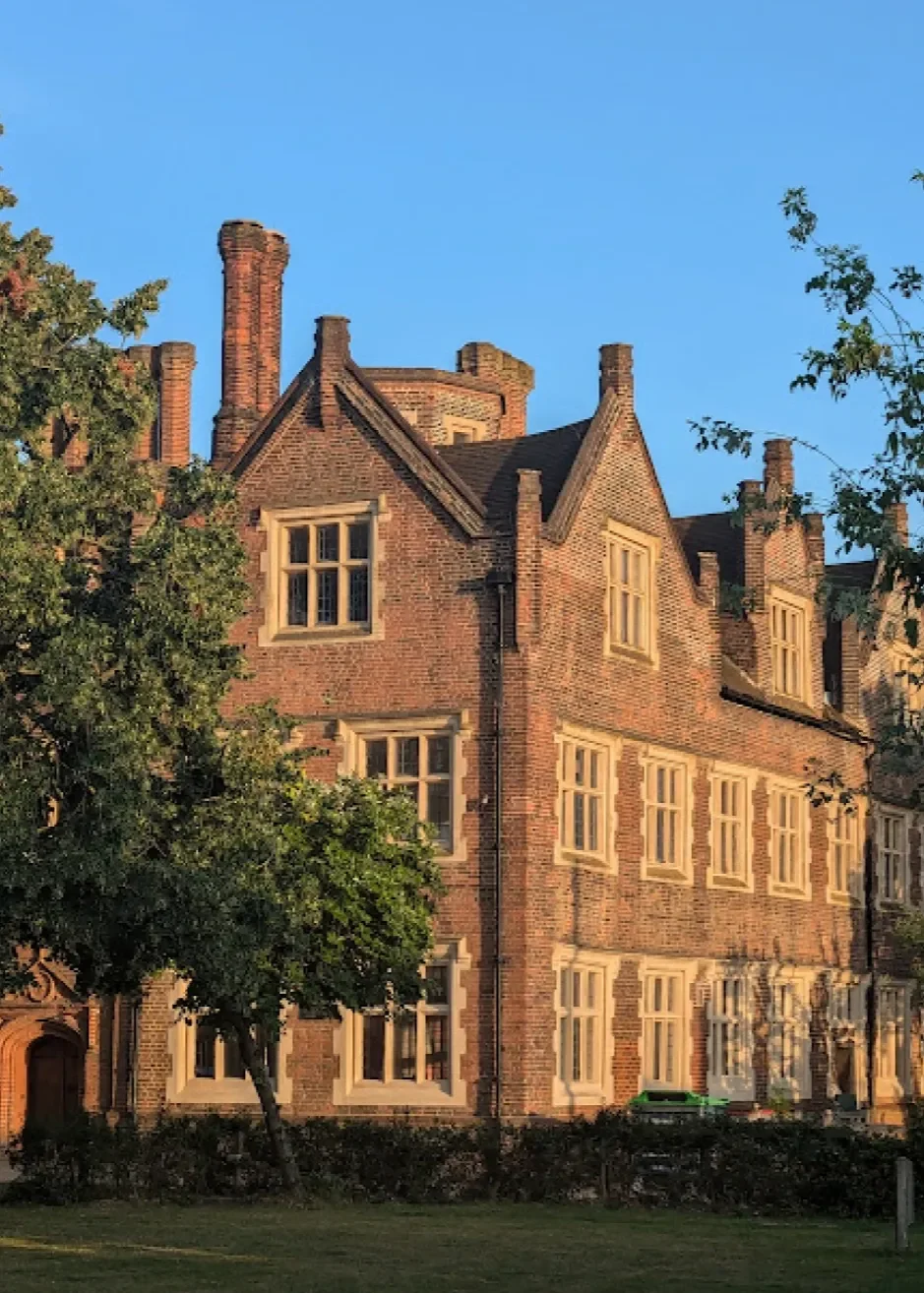
By the end of the Victorian era, Eastbury Manor was in a poor state, following the demise of its appeal as a comfortable home, and its poor treatment in later years as a predominantly working farmhouse.
A STATE OF DERELICTION
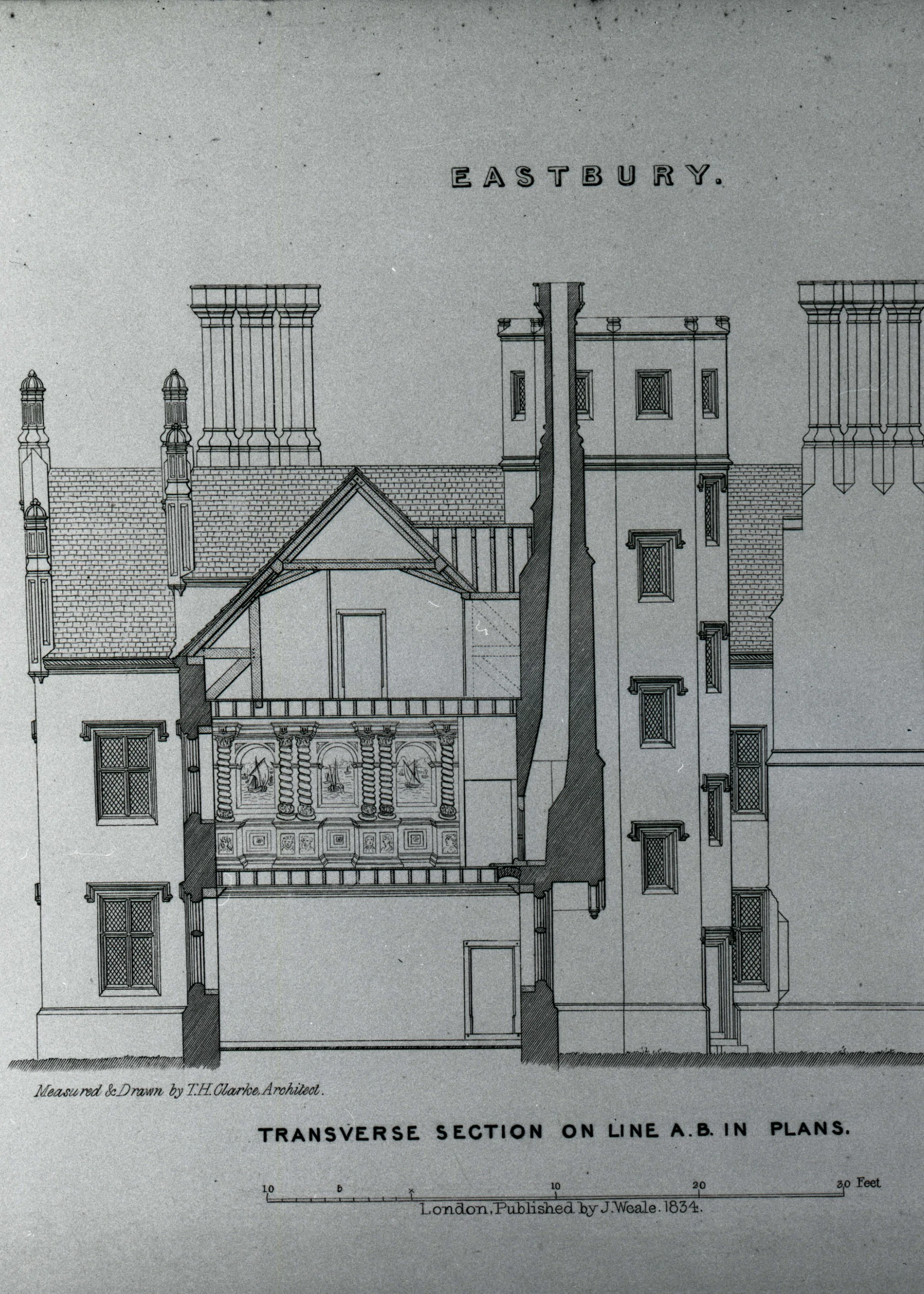
By the time Councillor Arthur Blake acquired Eastbury and its land from the Sterry family in 1912, the East wing, previously converted to farming use and stabling, was in incredibly poor condition. The rest of the house hadn’t fared much better- a sketch by Charles Vacher c.1832 shows the great hall with no ceiling, the floor of the Painted Chamber all but gone, and the wall paintings exposed.
Plans to demolish & World War I
Around this time, Eastbury acquired its modern day name- Eastbury Manor. Plans were circulating to create an ‘Eastbury Garden Suburb- and in 1913, the Tithe Barn and other farm buildings were scheduled for demolition. However, everything was put on hold due to the outbreak of World War I.
Eastbury was requisitioned by the army and played a key role in the war efforts; it was set up as a base for the barrage balloon apron which spanned the Thames, cutting of the flight path of German aircraft. All the time, a new owner of Eastbury, Percy Bayman, was preparing plans to demolish the Manor and sell off the materials.
This was thwarted by a chance encounter; Norman Wilkinson was sent to Eastbury to assess its suitability for use as a centre for injured soldiers. Wilkinson was also a member of The Society for the Protection of Ancient Buildings (SPAB). A flurry of activity ensued, eventually resulting in any demolition attempt on Eastbury being put on hold.
A NEW LEASE OF LIFE
Finally, in 1917, SPAB raised the funds to buy Eastbury, and in 1918, they handed ownership to the National Trust. The National Trust launched an appeal to raise money for its restoration; it was another 10 years before architect William Weir published his report, and plans for its restoration were set in motion.
Throughout the 1920’s-30’s, the sprawl of London expanded into the surrounding areas. Clough Williams-Ellis described this in a book of 1929 as like an octopus, spreading its tentacles across the countryside. Sadly, the medieval Tithe Barn was lost, to make way for new roads and the housing estate which now surrounds the Manor house.
However, the house itself was retained, reopening briefly as Barking Museum in 1935, before closing again for World War II. Since then Eastbury has served a number of roles, as an Air Raid Warden’s base, and a nursery for the children of Ford Dagenham’s workers during the war.